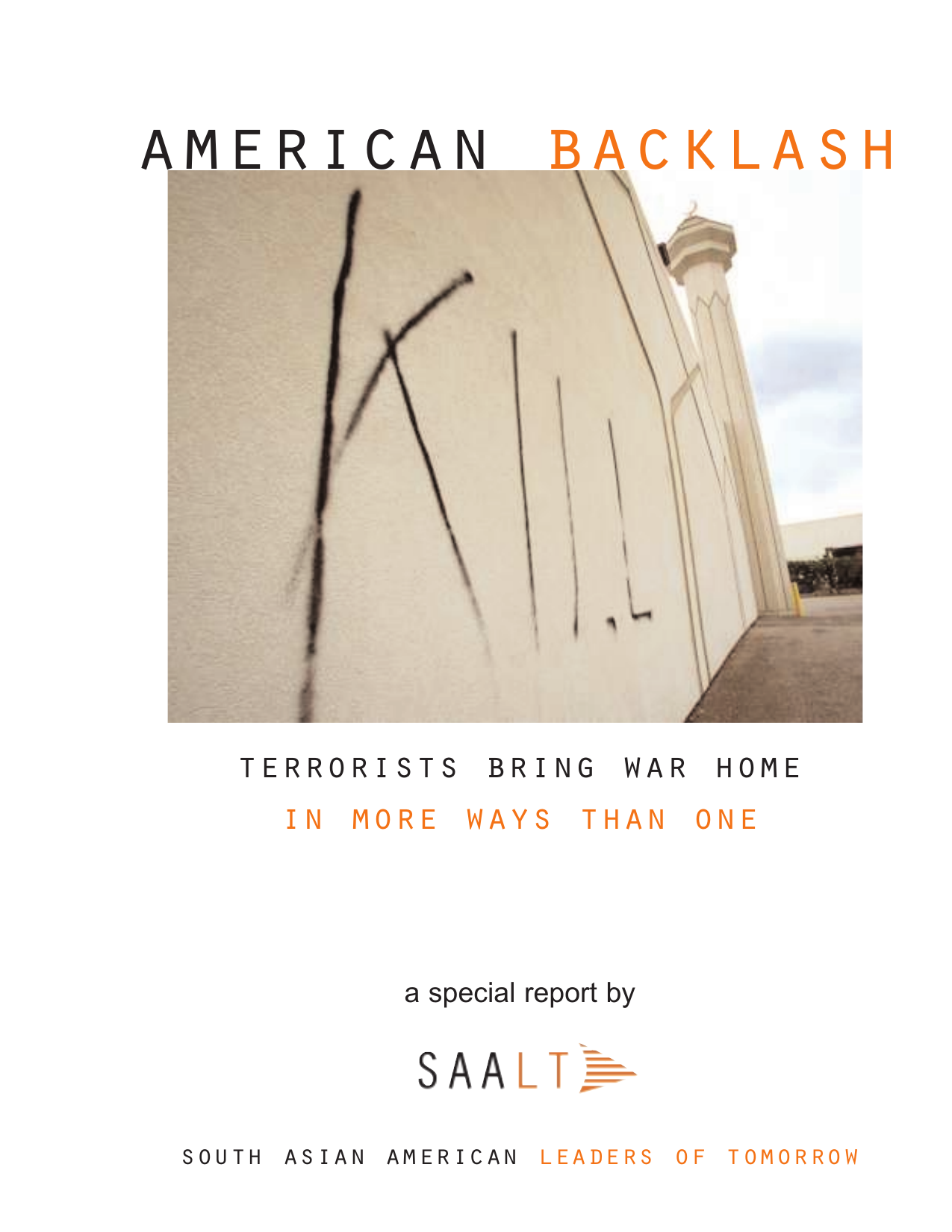
For every incident covered in the media, hundreds more went unreported.
These ranged from acts of violence, to workplace harassment, to everyday bullying. Some Muslim Americans who grew up in the post-9/11 era can’t recall a time when they weren’t being called a “terrorist.”
In the months that followed, these individual acts of hate metastasized into structural government policies targeting Muslim Americans and people with roots in Muslim-majority countries. This included airport profiling, the NSEERS Muslim registration, surveillance of mosques, and the new Department of Homeland Security.
The legacy of post-9/11 backlash persists today: U.S. wars overseas, the growth of DHS and ICE, and the use of “terrorist” as a label for any targeted minority.
Other communities have faced the same playbook: a nation’s hate targets a tiny group, which then turns into official government policy. This includes Asian Americans scapegoated after COVID-19, trans Americans vilified for existing, and Supreme Court enabling ICE profiling of Hispanic Americans.
Credits
Original research: American Backlash: Terrorists Bring War Home in More Ways Than One, South Asian American Leaders of Tomorrow (SAALT), 2001. Project leader: Debasish Mishra. Editing: Deepa Iyer. Research: Kiran Chaudhri, Kulmeet Dang, Poonam Desai, Ankur Doshi, Parvinder Kang, Debasish Mishra, Sunny Rehman, Vivek Sankaran. Special thanks: Deepa Iyer (recommendations); Probir Mehta (research resources); Masala.com (time for this project).
25th anniversary translation: Anirvan Chatterjee, [Name], [Name].